
Solar tiles have not become mainstream simply because looking like a roof is only part of the job. Cost, practical installation, roof layout, maintenance and a reliable supply chain all matter. SolarTyle's approach is to address those questions as a roofing system, with electricity generation integrated into the roof covering.
On 9 October 2026, BBC technology reporter Christine Ro explored why more roofs are not made of solar tiles. The article raises fair questions about the technology and its adoption. It is not a review of SolarTyle, and different solar roofing products should not be treated as interchangeable.
Our response starts with the roof. A solar tile needs to work as part of a weatherproof, maintainable covering, fit the proposed building and make commercial sense within a clearly defined project. Appearance matters, but it cannot substitute for those practical details.
Start with the roof, not just the solar cell
The UK roofing industry already works with battens, tile gauges, headlaps and established roof details. A solar roofing system should make those interfaces clear rather than leaving them to be improvised on site.
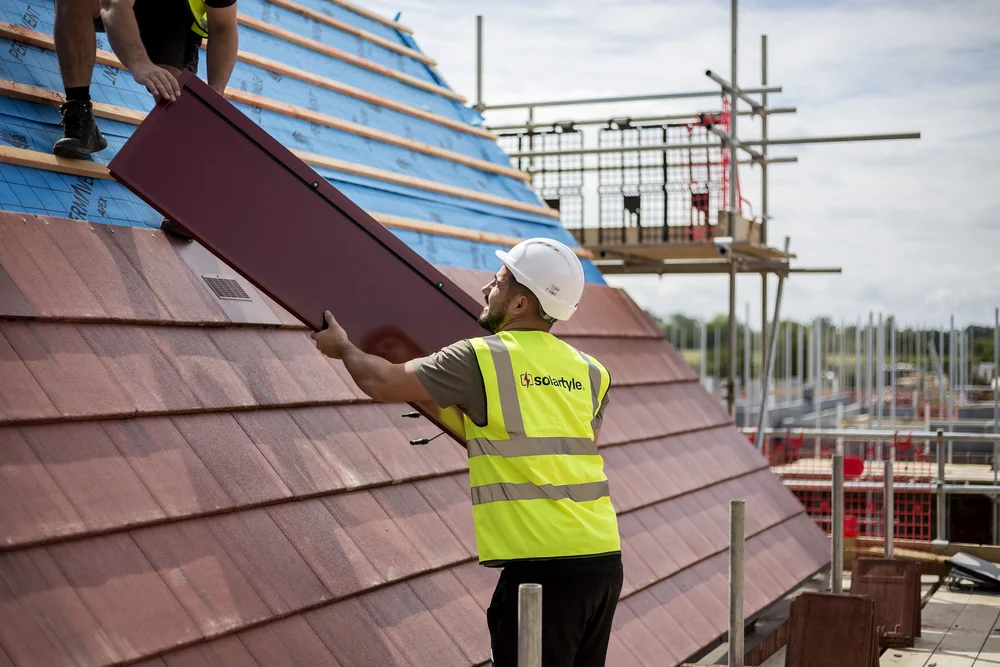
The current SolarTyle data sheet lists a 1500 mm-long solar tile. The installation guide explains how two mounting hooks are fitted before the tile is taken to the roof, then fixed to the battens with the specified wind-fastener and joining details.
This is a defined installation method, not a promise that every roof can be fitted in a set number of seconds or days. Roof pitch, compatible surrounding tiles, underlay, ventilation, batten spacing and the project design still need checking. The guide requires suitably qualified professionals and does not replace site-specific safety planning or electrical requirements.
For new builds and full re-roofs, considering the solar system early lets the roofing and electrical work be planned together. See our solar roofing guide for developers and architects and installation overview.

Module efficiency and roof output are different questions
A product's efficiency is useful, but it is not the whole answer to how much electricity a home will generate. Compare the actual product specification and the proposed roof layout, rather than applying one efficiency range to every solar tile.
SolarTyle's current data sheet publishes module power up to 95 W and module efficiency up to 22.5%. These are published product ratings, not a measured annual yield or a claim that every colour and variant has the same output. The proposed system's product schedule should identify the modules and ratings being quoted.
SolarTyle uses interdigitated back contact, or IBC, cell technology. Its electrical contacts sit behind the cell rather than forming a conventional front-side contact grid. That cell design is one part of the finished product; it should not be confused with the output of an entire roof. Our IBC technology guide explains the distinction.
Three measures should stay separate:
- Module efficiency: how a specified product converts incident sunlight under its stated test conditions.
- Installed capacity, in kWp: the combined rated peak power of the selected modules.
- Predicted annual generation, in kWh: the electricity a model estimates the proposed system could produce over a year.
Two systems with the same rated capacity can have different predicted annual generation. Orientation, shading, roof geometry and the final arrangement matter. Read why two 4 kWp systems can produce differently.
Make the useful roof space work harder
A simple rectangular roof and a roof with hips, valleys, dormers, chimneys or rooflights present different design problems. Large-format modules may fit one well and leave awkward spaces on another. A tile-format system offers another layout option, but required clearances and roof details still apply.
The important comparison is the proposed whole-roof design. Can it use the most productive elevations effectively? Is shading accounted for? How does its predicted annual generation compare under the same assumptions?
Using a better-performing elevation can sometimes meet a generation target with less installed capacity than a layout relying more heavily on weaker elevations. That is a design outcome to demonstrate for the particular building, not a universal percentage advantage for solar tiles.
Our guides to solar on complex roofs and south, east, west and north-facing solar explain the factors to compare.
Moor Hall: integrated solar at development scale
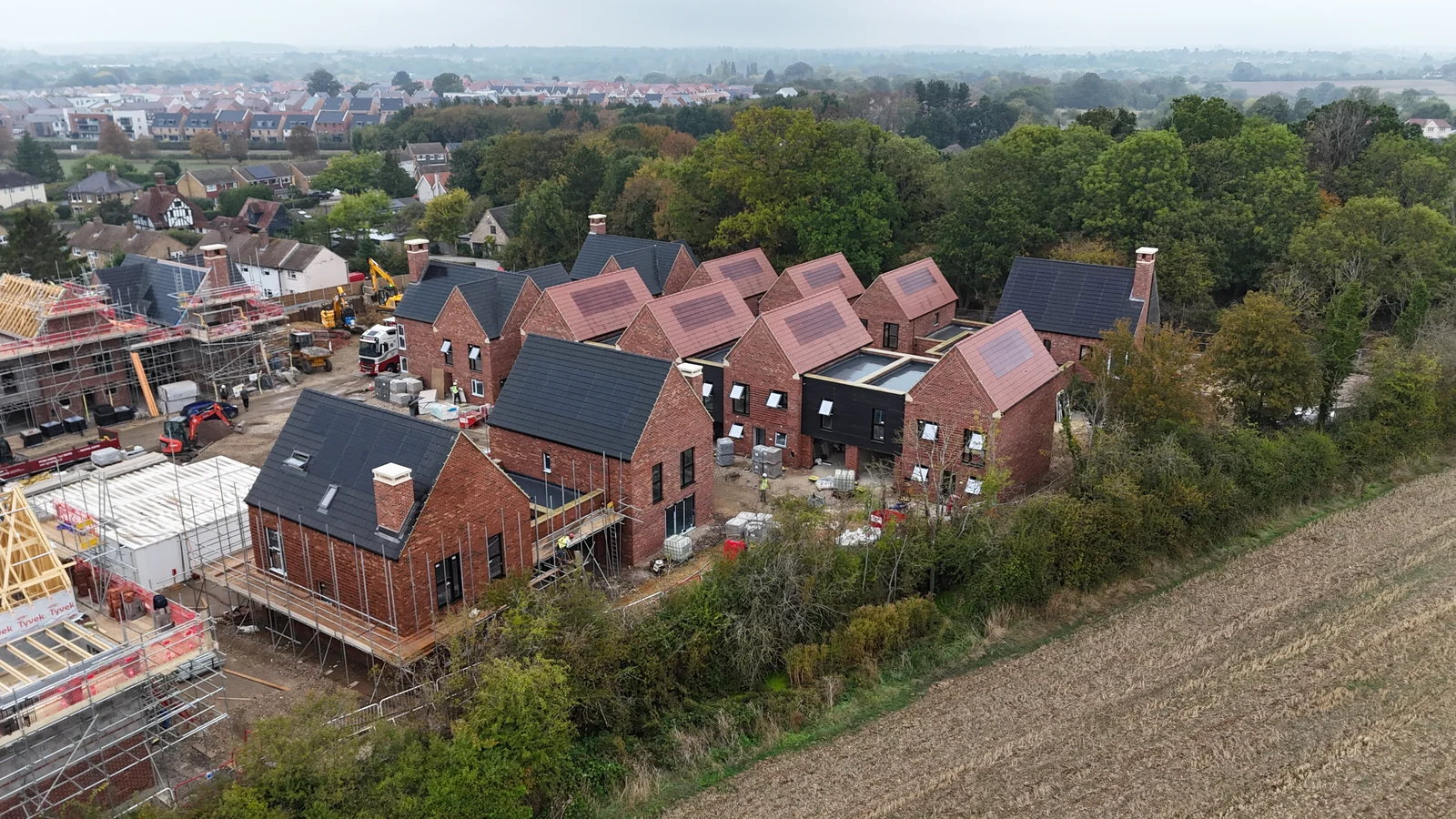
Moor Hall in Harlow, Essex, is a 38-home development described in SolarTyle's project brief. Its energy design is being considered alongside the architecture, with red and anthracite integrated solar roofs visible across the ongoing scheme.
Our published Future Homes roof-space example discusses the value of placing capacity on more productive roof elevations. Such a comparison should identify the original and revised layouts, orientation, shading and generation-model assumptions. It must not be presented as measured electricity output where the figures are design predictions.
View the Moor Hall case study and project film
Compare the same roof and the same quotation scope
A new-build or complete roof replacement is a different buying decision from adding panels to an otherwise sound existing roof. Part of the roof covering is already being purchased and installed, so the comparison needs to show what each option includes.
Ask for the same roof layout, required generation target and installation scope. Separate the roof covering, solar components, installation, electrical connection, scaffolding, VAT treatment and any battery storage. Do not compare a supply-only price with a complete installed project.
SolarTyle's solar roof tile cost comparison explains the like-for-like approach. It remains our main pricing guide; this article does not introduce a new unscoped headline price.
A solar roof needs a maintenance plan
A roof is a long-term building component. The solar specification should therefore cover fault diagnosis, component identification, safe access and the route to replacement parts, as well as initial installation.
A modular system is intended to support work on individual components, but safe access and electrical isolation still need professional planning. Solar tiles must not be treated as a surface to walk on. The SolarTyle installation guide explicitly warns against direct foot traffic and explains the need for suitable protective access methods.
Before ordering, check the actual product and warranty documents, installer responsibilities and how a future fault would be handled. A product warranty and an installation or workmanship arrangement are different parts of that discussion.
Installation support and a usable supply chain matter
A product is easier to specify when its documentation, compatible roof details and supply route are clear. Architects, developers, contractors and homeowners need practical information as well as an attractive finished roof.
SolarTyle's distribution-partner page and installation resources set out the available routes and guidance. Confirm stock, lead times, compatibility and the appropriate installer for the project rather than assuming every merchant or local installer offers the same service.
SolarTyle's public contact address is The Building Centre, 26 Store Street, London WC1E 7BT. Contact the team before arranging a product viewing so the visit and availability can be confirmed.
The future is more than appearance
The BBC also discusses Tesla's reported decision to stop offering its Solar Roof. That concerns one manufacturer's product offering; it does not establish whether a different integrated solar system suits a particular UK building.
The useful questions remain practical. Does the system fit the roof? Is its specification documented? Is the generation comparison fair? Can it be installed and maintained properly? Does the written quotation make commercial sense for the project?
Solar tiles are not the right answer for every roof. For suitable new builds and re-roofs, they can offer a route to solar generation that respects the intended roofline. Actual projects, clear specifications and like-for-like comparisons are a better basis for the decision than treating all solar tiles as a single category.
Questions about solar tile adoption
Are all solar roof tiles less efficient than standard panels?
No single efficiency figure describes every solar roofing product. Compare the rated specification of the actual modules, then compare the proposed roof layouts and predicted annual generation separately.
Can a solar tile system meet a target with fewer kilowatts?
In some designs, placing more capacity on better-performing elevations can meet a target with less installed capacity than an alternative layout. It needs a project-specific comparison under consistent assumptions, not a blanket saving percentage.
Are solar tiles only an aesthetic choice?
Appearance is one consideration. Roof geometry, usable solar area, compatibility, installation scope and maintenance also affect whether an integrated tile system suits the building.
Can I install solar tiles myself?
SolarTyle's guide is for qualified professionals. The system involves roofing, electrical work and work at height; the project's design, safety requirements and installer responsibilities must be addressed.
Explore solar for your roof
Bring the roof layout, project stage and energy requirements into one conversation. Review real roof examples, then request a quotation with a clearly defined scope.
Request a Quote See more SolarTyle projects